Last updated November 25, 2026
 Sliding glass doors
 Single hung
 Double hung
 Horizontal roller
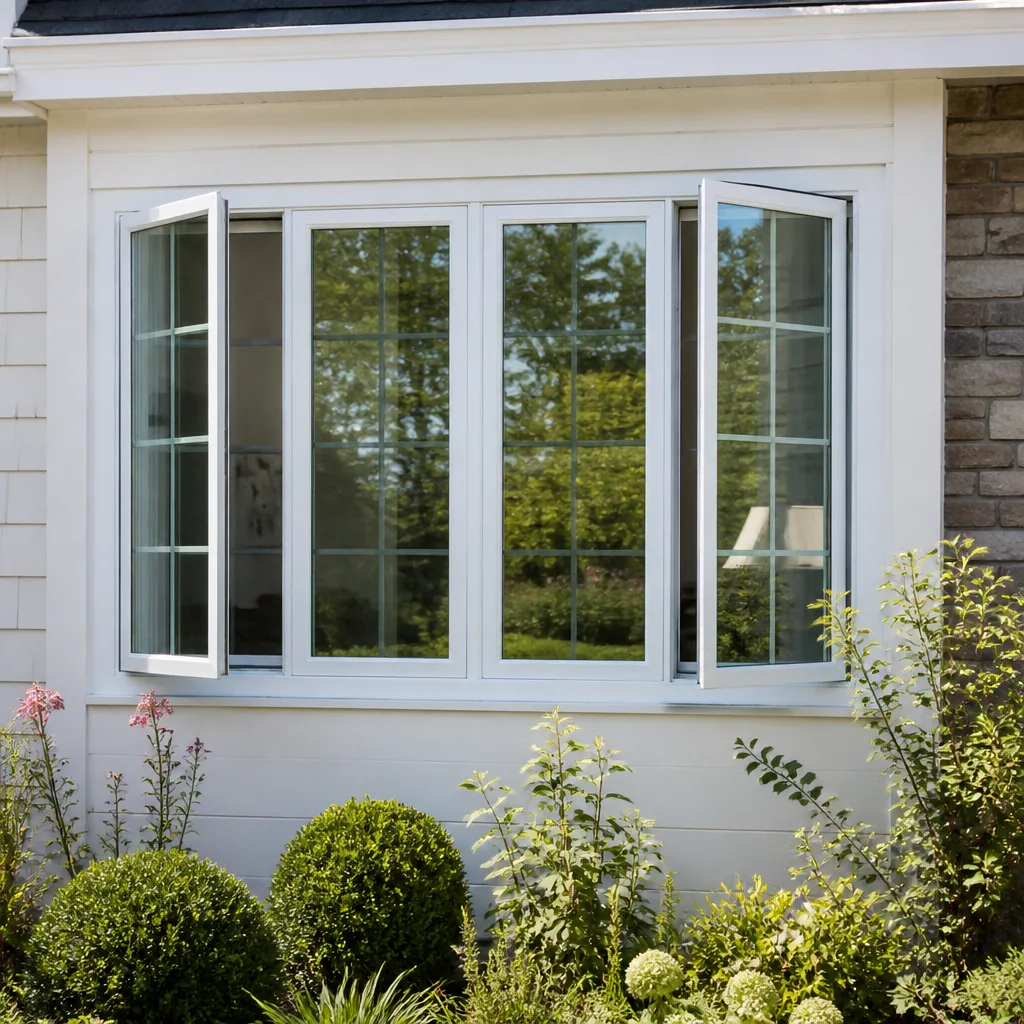 Casement
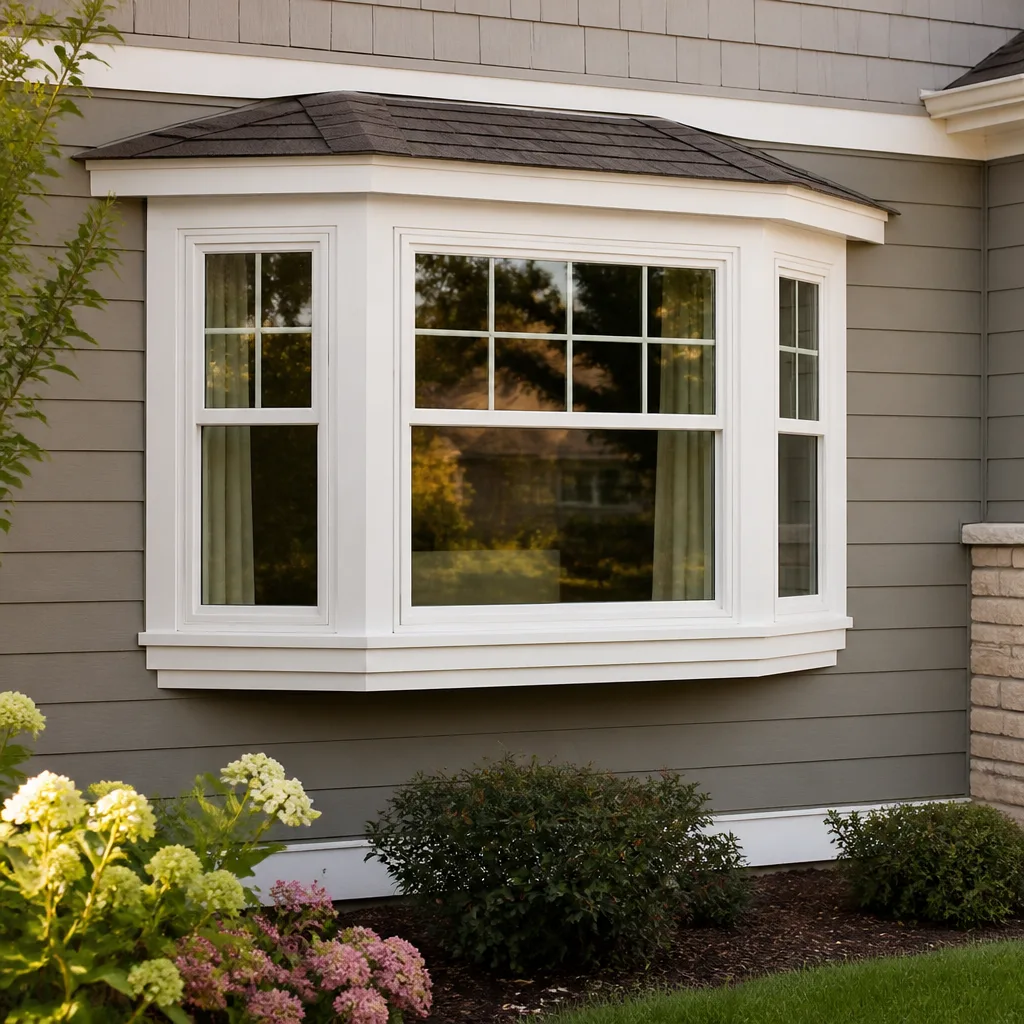 Bay & bow
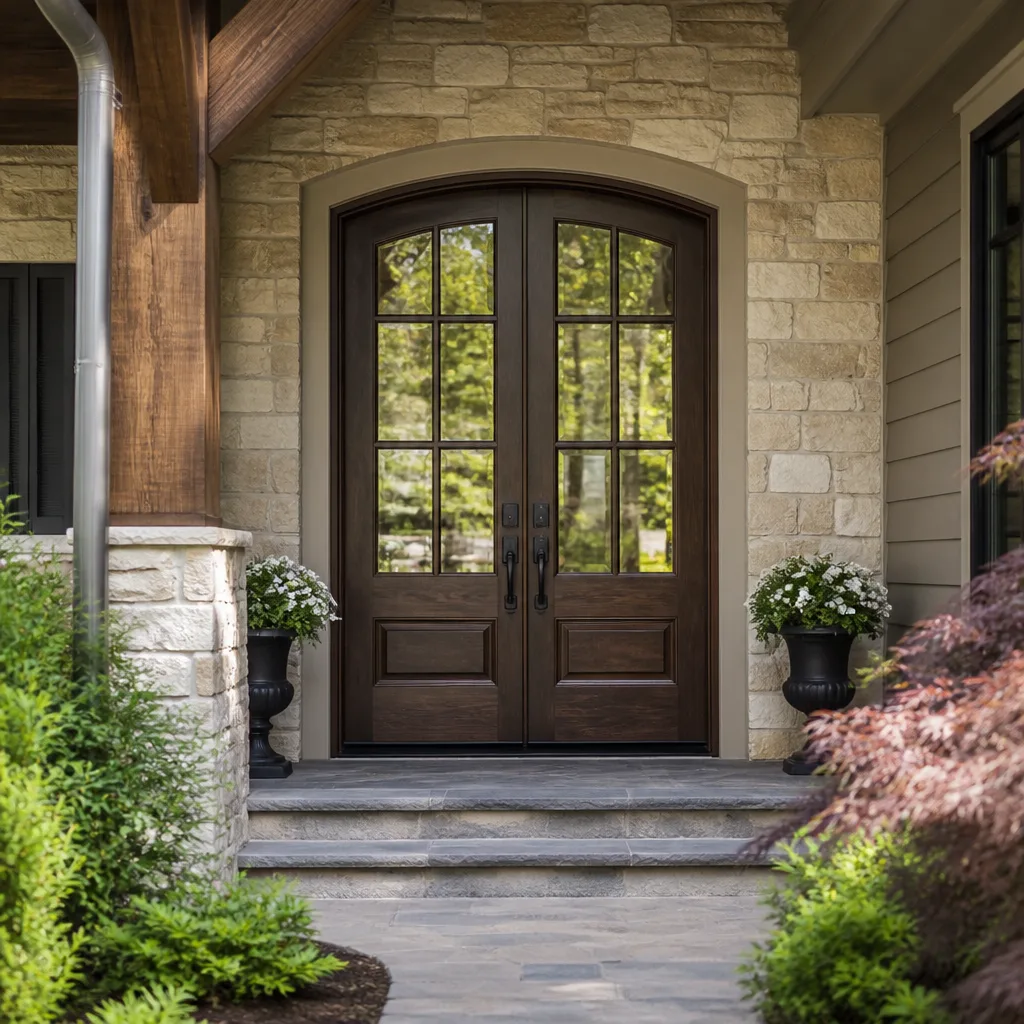 Entry doors
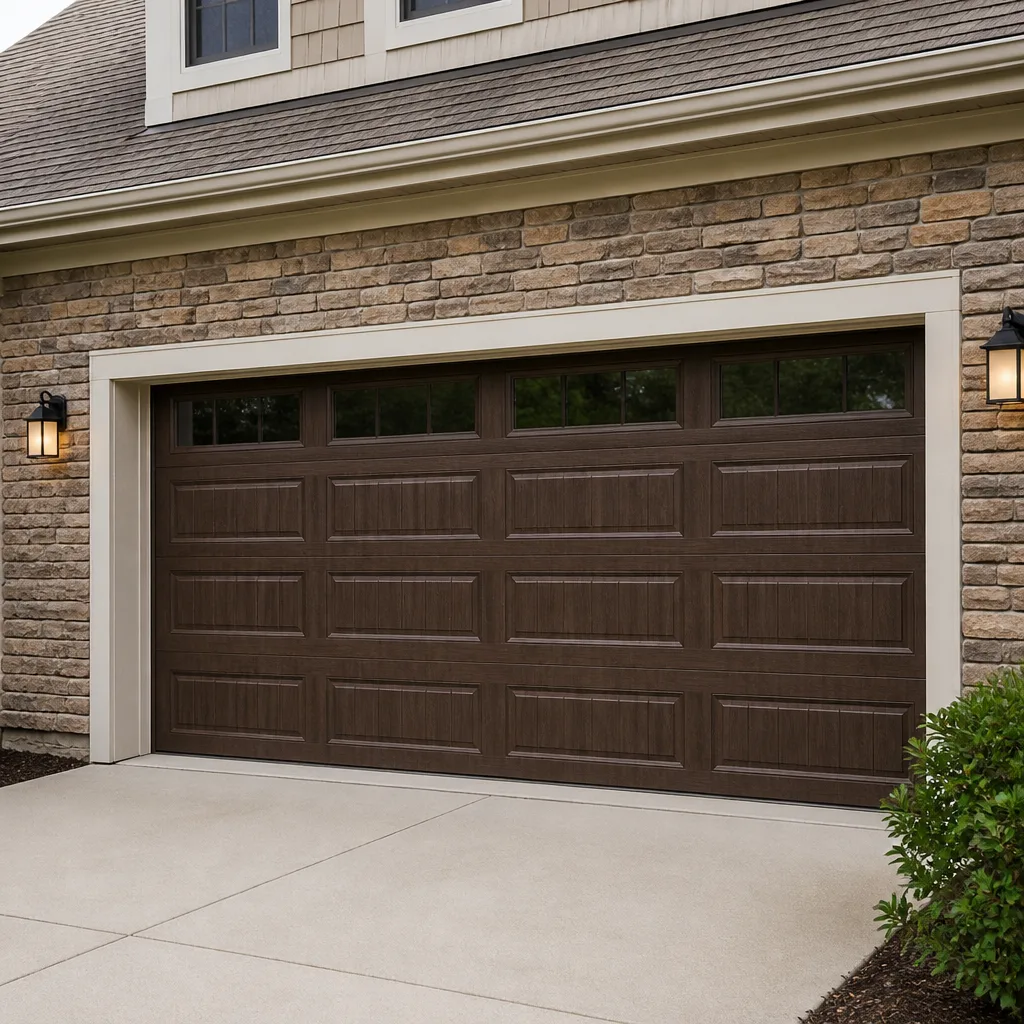 Impact garage doors
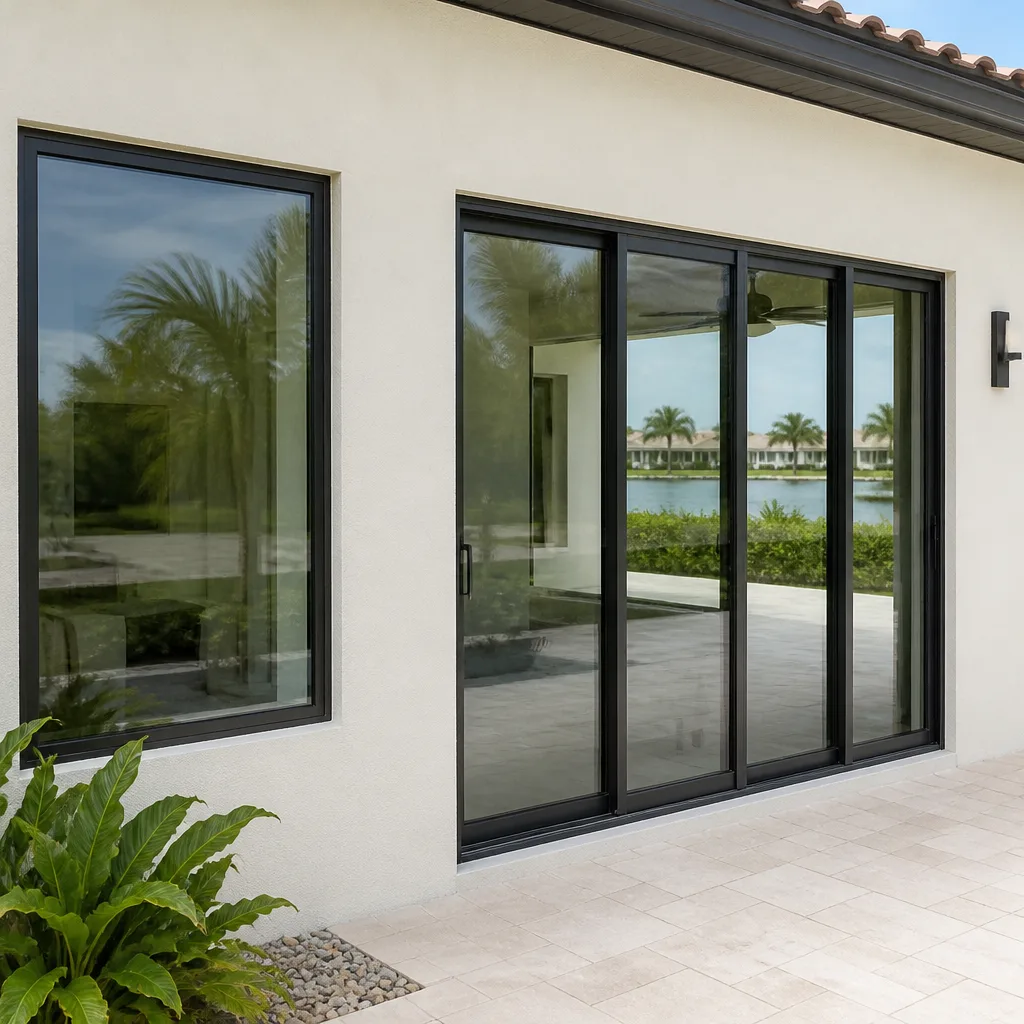 PGT
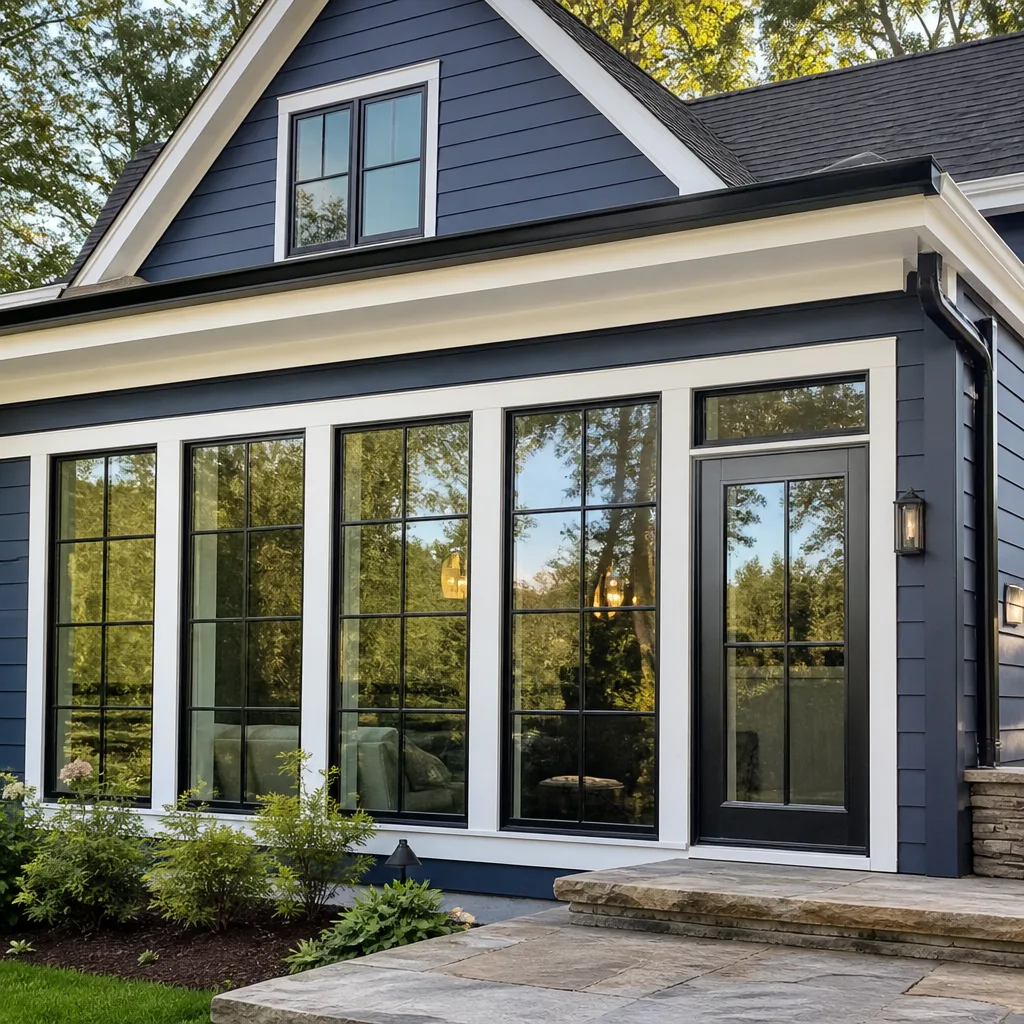 CGI
Free in-home measure and quote - PGT, CGI and CWS impact lines compared on your actual openings, style by style
Get your free estimateSeasonal Windows & Doors Care for Tacoma: Year-Round Homeowner’s Guide
Most Tacoma homeowners assume winterizing is a cold-climate chore. We don’t get Minnesota winters, so the weatherstripping gets skipped and the door sweep gets ignored until something feels wrong. But here’s what we’ve learned installing windows and doors across this city: our October-through-February moisture load does to a wood-clad frame what hard freezes do elsewhere – just slower, quieter, and with less warning. Ice cracks a seal in a night. Constant damp works on it for five months. This guide walks through a month-by-month care cadence built around Tacoma’s actual weather patterns, not a generic national checklist.
Quick Answer
Seasonal care in Tacoma revolves around one cycle: keep water moving away from frames from fall through spring, manage indoor humidity through winter, treat moss and organic growth in spring, then catch dry-season settling on doors in July and August before the rain returns. Windows and doors in Tacoma need inspection roughly every season, deeper attention twice a year, and replacement when seals fail or frames stay swollen after the rains stop.
Styles & brands we work with
- Single hung
- Double hung
- Horizontal roller
- Casement
- Bay & bow
- Sliding glass doors
- Entry doors
- Impact garage doors
- PGT
- CGI
Table of Contents
- Fall Prep: Clearing Drainage Before the November Rain
- Winter Condensation: Normal Surface Moisture vs. Failed Seals
- Spring: Moss on North-Facing Frames and Sealant Joints
- Summer Door Alignment and the Dry-Season Shift
- Storm Door and Screen Swap Cadence
- Sliding Doors: The Most Deferred Upgrade in Tacoma
- When Care Turns Into Replacement
- Choosing a Brand for a Moisture-Heavy Climate
Fall Prep: Clearing Drainage Before the November Rain
The single most useful thing you can do for your windows and doors in Tacoma happens in October, and it doesn’t involve the glass at all. It’s about water leaving the frame. From roughly November through February, this region delivers a sustained moisture load – days of drizzle, bursts of wind-driven rain, and very little drying time between storms. Frames that shed water poorly in July become frames that hold water by December.
Here’s the cadence we recommend for fall:
- Walk every sill and threshold. Look for weep holes – the small drainage slots at the bottom of window sills and sliding door tracks. These clog with fir needles, leaf litter, and grit over the summer. Clear them with a soft brush or a piece of wire, never a pressure washer.
- Check the slope. Sills should shed water outward. If water pools at the base of a frame during a light rain, that’s a drainage problem, not a cleaning problem, and it needs a professional look.
- Clear gutters and downspouts above window walls. Overflow from a clogged gutter dumps directly onto the head of a window. That’s how rot starts at the top casing.
- Test the door sweep and weatherstripping. A dollar bill closed in the door should drag slightly when pulled out. If it slides free, air and water are getting in.
- Look at the exterior sealant joint where the frame meets the siding. Small cracks are normal. Gaps you can see daylight through are not.
What happens when you skip this? Water sits in the sill channel, seeps behind the frame, and soaks into the rough opening. Wood cladding swells. Vinyl can’t swell, so it does something else – it traps moisture against the sheathing behind it. By spring you have a soft spot you didn’t have in October, and it’s behind the wall, where you can’t see it. Our technicians have up to 10 years of experience and one of the most consistent things they find on Tacoma inspections is water damage that started at a clogged weep hole two or three seasons earlier. If you’d rather have a professional assess the whole exterior at once, that’s what a window replacement evaluation does before any work is quoted.
Winter Condensation: Normal Surface Moisture vs. Failed Seals
Every winter we get calls from Tacoma homeowners convinced their windows have failed because there’s water on the glass. Most of the time, nothing has failed. The trick is telling the two apart, because one is a house-humidity issue and the other is a product issue.
Surface condensation is normal. It forms on the room-side of the glass when warm indoor air meets a cold pane. In Tacoma, our winters are mild by temperature but our indoor air gets humid fast – cooking, showers, laundry, and the fact that we keep the house closed up for months. A little fogging at the bottom of the glass in the morning that clears by midday is a humidity signal, not a window failure. Running the bath fan longer, cracking a window for ten minutes, and keeping interior doors open all help.
Between-pane fogging is a failed seal. If the haze or droplets are trapped between the two panes of a double-pane unit – where you can’t wipe them off – the seal has failed and the insulating gas is gone. That unit has lost its insulating value and needs replacement. No amount of humidity management will fix it.
Here’s a simple way to sort it out:
- Condensation on the room-side glass and you can wipe it off = surface condensation, manage humidity.
- Fog or droplets trapped between panes = failed seal, plan for replacement.
- Water pooling on the sill inside the house = a leak, not condensation. Investigate immediately.
- Condensation only on one window while others are clear = check that window for an air leak around the frame.
The threshold that matters is relative humidity. When a Tacoma home runs above roughly the level its windows can handle for the outdoor temperature, the glass becomes the dehumidifier. That’s the glass telling you something about the house, not about the window.
Spring: Moss on North-Facing Frames and Sealant Joints
Once the rain eases in spring, walk the exterior of your home and pay particular attention to the north side. North-facing frames get very little direct sun in a Tacoma winter, which means they stay damp longer than any other side of the house. Damp plus shade plus a mild climate is exactly what moss and algae need, and they colonize exterior sealant joints faster than homeowners expect.
Moss looks cosmetic. It isn’t. A moss colony holds moisture against the sealant continuously, and the roots work into the joint. Once moss is established in the sealant line between the frame and the siding, the joint is no longer watertight, and that’s the path water uses to get behind the frame. Treat it in spring, before it establishes for the summer growing season.
What to do:
- Identify the growth. Green fuzzy growth is moss. A gray-green film is algae. Both hold moisture; moss is the bigger problem.
- Clean gently. A soft brush and a mild soap solution are enough. Never scrape with a metal tool, and never use a pressure washer on a sealant joint. You’ll drive water in and blow out the sealant.
- Let it dry fully for a couple of days of dry weather before you do anything to the joint.
- Inspect the sealant. Once clean and dry, look for cracks, gaps, or a joint that lifts away from the frame. Any of those means the joint needs to be redone.
- Reassess the frame itself. If moss has been there a while, check the frame for softness, especially on wood-clad units. A soft frame isn’t a cleaning job anymore.
If the moss has worked into the sealant joint and the joint is failing, surface cleaning won’t hold. That’s the point where a professional should look at the frame, because the water path is now open every time it rains. Our technicians have up to 10 years of experience tracking that kind of water path across Tacoma homes, and a free estimate is the easiest way to know whether you’re looking at a cleaning job or a window installation.
Summer Door Alignment and the Dry-Season Shift
Here’s a Tacoma quirk that catches people off guard. Just when the weather is nicest, in July and August, your doors go out of alignment. Entrance doors stick or won’t latch without a shove. Sliding doors drag. Nothing is broken – the frames and doors themselves have dried out and shrunk slightly, and the door has settled a millimeter or two in the opening.
Composite and wood frames are the ones that move most. They absorb moisture in the wet months and swell, then shed it in the dry months and contract. That swelling and shrinking is exactly what throws off the strike plate alignment and the latch. Leave it alone through the dry season and it usually improves as the fall moisture returns – but wait until fall and the door can settle unevenly and stay misaligned permanently. Better to check in summer and make the small adjustments before the rain comes back.
What to check in summer:
- Does the door latch with a light push, or does it need a shove?
- Is there a consistent gap all the way down the latch side?
- Does the door sweep still contact the threshold evenly, or is one end lifting?
- Does a sliding door still roll smoothly, or is it dragging at one point?
Adjusting a strike plate is a homeowner-level task – loosen the screws, shift it slightly, retighten. If the door has settled enough that no small adjustment works, the frame itself may be settling, and that’s a professional call. This is also the season when homeowners start planning door replacement before the wet season returns, because a new unit can be fitted when the framing is at its driest and set to accommodate the seasonal movement.
Storm Door and Screen Swap Cadence
Most people run the storm door and screen swap on the calendar – screen out in May, glass in by October, roughly. In Tacoma, we’d argue it should be run on the weather instead, because our storm and drizzle pattern doesn’t align neatly with calendar dates. The point of a storm door pane is wind and rain protection; the point of a screen is airflow. The swap should happen when the weather actually shifts, not on a fixed date.
Rough cadence for Tacoma:
- Switch to screens when the spring rain is reliably over and you want ventilation. That’s usually when the sustained drizzle pattern breaks, not on a set date.
- Switch to glass panes before the first real wind-driven rain event of fall, which can arrive earlier than people expect. Watch the forecast rather than the calendar.
- Clean both sets when you swap them. Dirty screens hold moisture and dirt against the frame.
- Inspect the storm door closer each swap. A failed closer lets the door slam, which is one of the fastest ways to loosen a frame.
The single most common mistake here is leaving screens in through a long, wet fall. A screen doesn’t keep wind-driven rain off the entry door. Water gets through the mesh, onto the door, onto the threshold, and behind the storm-door frame. Over a wet season, that’s enough to make a wood entry door swell and stick. If your entry door has been through a few seasons of this and is showing signs of it, the conversation moves from storm door panes to a full entry door assessment.
Sliding Doors: The Most Deferred Upgrade in Tacoma
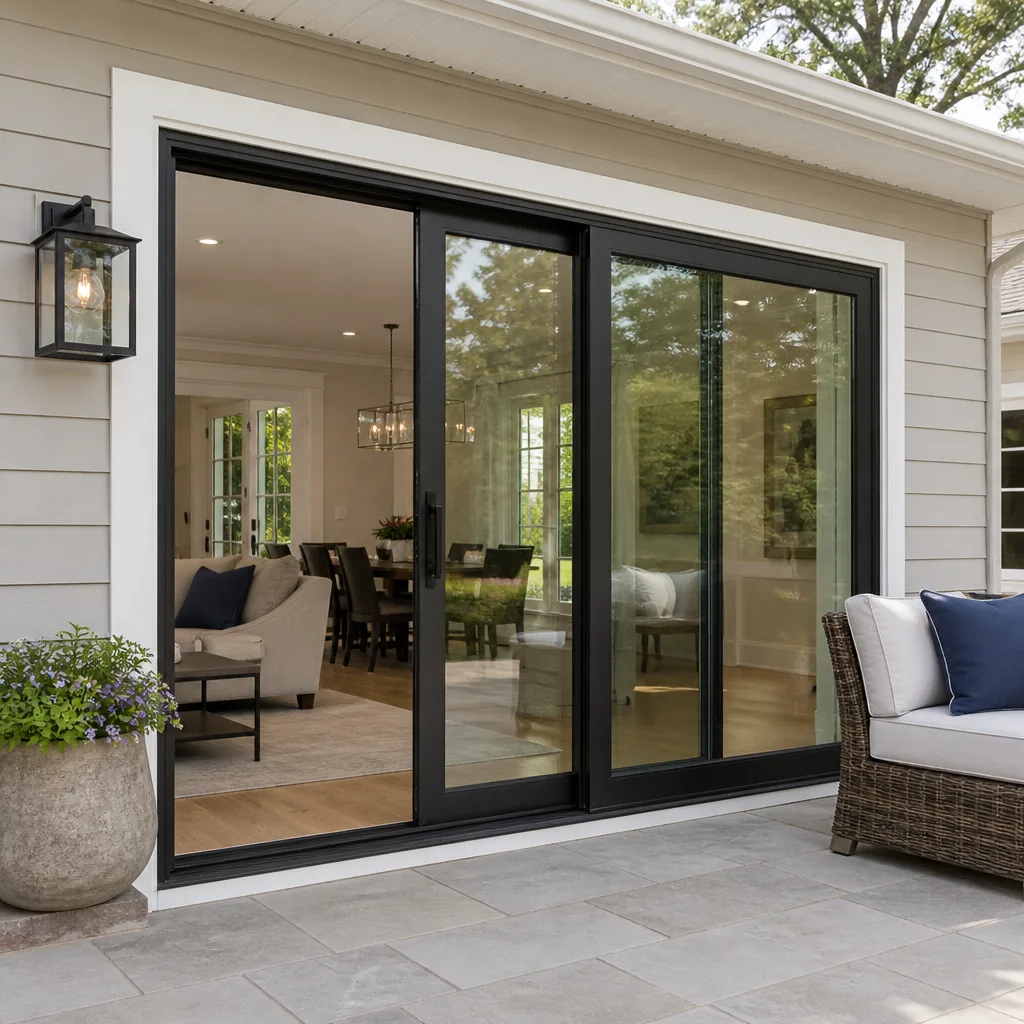
Sliding patio doors are the most deferred upgrade we see, and in a Tacoma climate that deferral is especially costly. A sliding door is a large, single opening in the wall, and it moves on tracks. The tracks collect debris year-round, the rollers wear, and the weatherstripping takes more constant moisture exposure than any other door on the house. It’s also the one piece of the exterior envelope most homeowners stop using before they replace it – the family stops using the patio because the door drags or the seal is gone, and that gets normalized.
Sliding door replacement is a named service for us because it’s technically specific. It’s not the same job as a hinged entry door. The track has to be level and true, the sliding panel has to seal against a fixed panel, and the threshold has to shed water properly. Get any of those wrong and you have a door that leaks in a Puget Sound winter regardless of how good the panel itself is.
Watch for these signals that care has become replacement:
- The door drags at one point in its travel even after cleaning the track.
- Visible gaps in the weatherstripping, or you can feel cold air along the meeting point of the two panels.
- Water on the floor inside during a wind-driven rain.
- The frame around the door feels soft or has visible moss at the base.
If it’s the door itself that’s failed, replacement is the answer, and that’s a conversation to have before fall rather than during a wet week.
When Care Turns Into Replacement
Good seasonal care stretches the life of windows and doors. It doesn’t make them last forever. There comes a point where maintenance becomes a losing battle, and the honest thing is to recognize it. In a moisture-cycling climate like Tacoma’s, that point tends to arrive for the reasons below.
- Seal failure in a sealed unit. Between-pane fog or droplets that won’t wipe off means the insulating gas is gone and the unit can’t be restored.
- Frame softness. If you can push a fingernail into the frame near a sill or corner, water has gotten into the frame material. That’s the wall behind it at risk, not just the window.
- Recurring water intrusion at a threshold or sill even after drainage and sealant have been addressed.
- Doors that won’t stay aligned after adjusting the strike plate and hinges.
- Constant surface condensation on windows even with humidity managed – usually a sign the glazing’s insulating value is spent.
One point worth stating plainly: for most of these, the answer is replacement, not repair. Our focus is on new window and door installation, and a unit with a failed seal, a soft frame, or a soaked rough opening generally needs to come out and be replaced with a new one. We take replacement or installation projects of three openings or more, so a multi-window or multi-door project is the kind of work we’re built for.
Replacement is not an emergency job. Nobody replaces a set of windows in an afternoon, and it’s worth saying out loud that planning matters more than speed here. Get the assessment, compare options, and schedule the work for a dry window of weather.
Choosing a Brand for a Moisture-Heavy Climate
If seasonal care is telling you it’s time to replace, the product decision matters as much as the installation. We carry eight brands on purpose, because the right window for a moisture-cycling climate isn’t the same choice for every home or every budget, and we don’t want homeowners locked into a single manufacturer’s price tier. It also means we can compare products side by side before you commit.
For storm and wind exposure, we carry impact-rated lines through PGT, CGI, ES Windows, and ECO Window Systems – relevant for homes in wind-exposed spots around the city. For standard replacement, our lineup includes mainstream brands like CWS and Mr-Glass alongside the impact-rated options. And on the door side, our Therma-Tru expertise means a homeowner can coordinate windows, entry doors, and sliding doors through one specialist rather than juggling three contractors.
What to weigh:
- Frame material. Vinyl handles moisture without swelling. Wood-clad needs more attention in our climate. Composite sits in between.
- Glazing. A sealed unit’s insulating value is what determines whether you get surface condensation every winter.
- Impact rating. Worth considering if your home sits in a wind-exposed area.
- Weatherstripping quality. This is the part that determines how much water and air get past the door.
Whatever brand you choose, the installation is what makes the product perform. The brands we work with are only as good as the fitting, and fitting is where our window and door specialists spend their care. Windows and doors only – that’s all we do.
Common Mistakes to Avoid
- Pressure-washing a window or door frame. It’s the fastest way to blow out a sealant joint and drive water behind the frame. Clean gently, by hand.
- Treating surface condensation as a failed window. Most of what you see inside in winter is a house-humidity issue, not a product defect. Manage the humidity before you call for a replacement.
- Ignoring the north side of the house. It gets the least sun in a Tacoma winter and the most moss. It’s the side that needs the first look every spring.
- Shoving a sticking summer door instead of adjusting it. A door that needs a shove in July usually needs a strike-plate adjustment, not more force.
- Leaving screens in through a wet fall. Screens don’t stop wind-driven rain. Swap to glass before the fall rain sets in.
- Assuming a stuck sliding door is just a track-cleaning job. A door that still drags after cleaning has a roller or frame problem that care won’t fix.
- Putting off a soft frame until spring. If the frame is soft, water is already inside. Every extra wet season makes the damage behind the wall worse.
See the difference
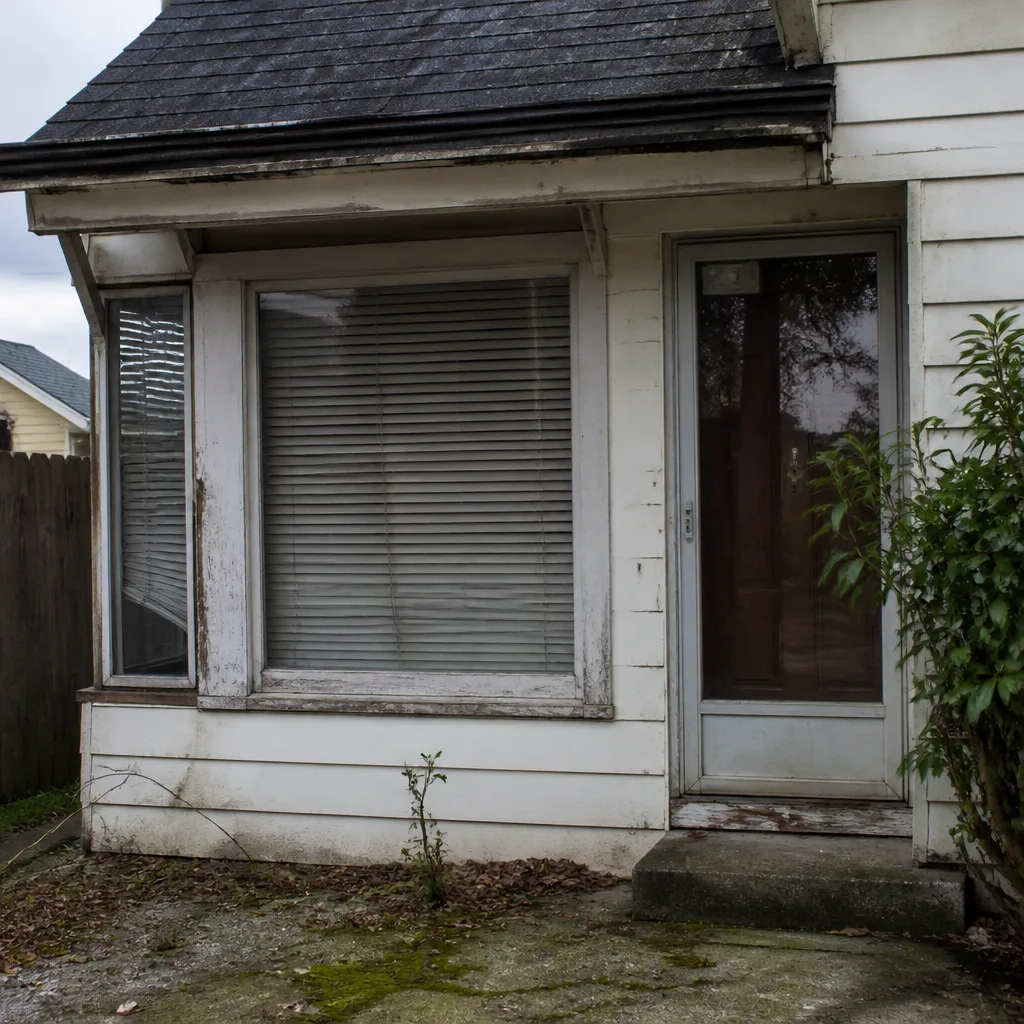 Before
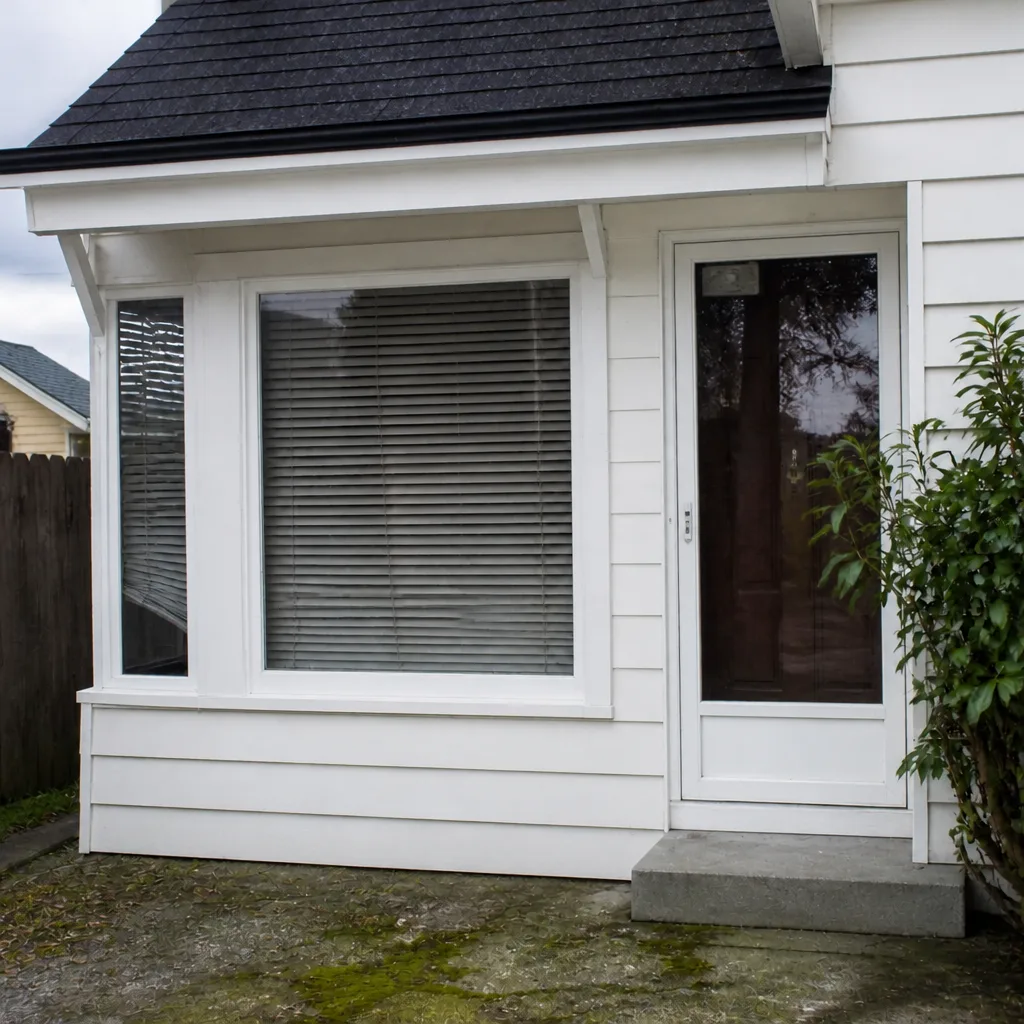 After
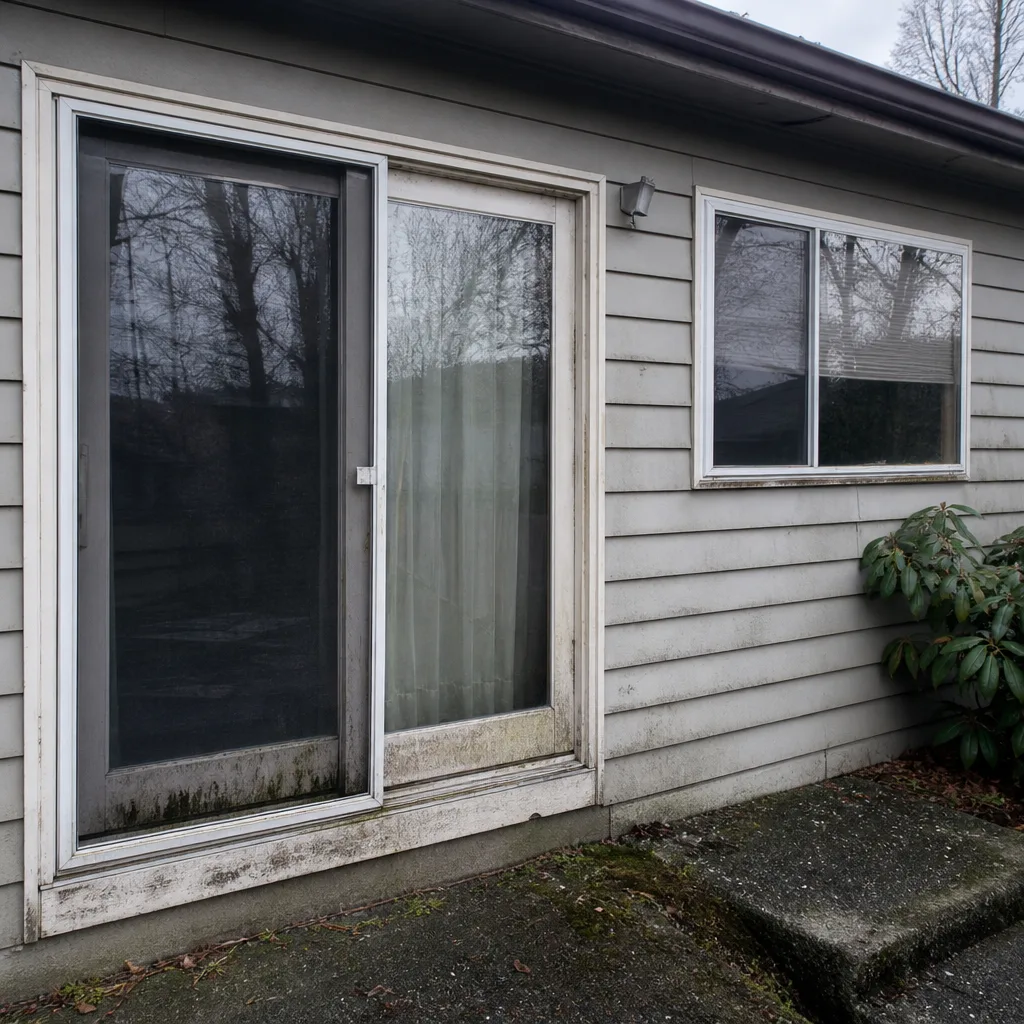 Before
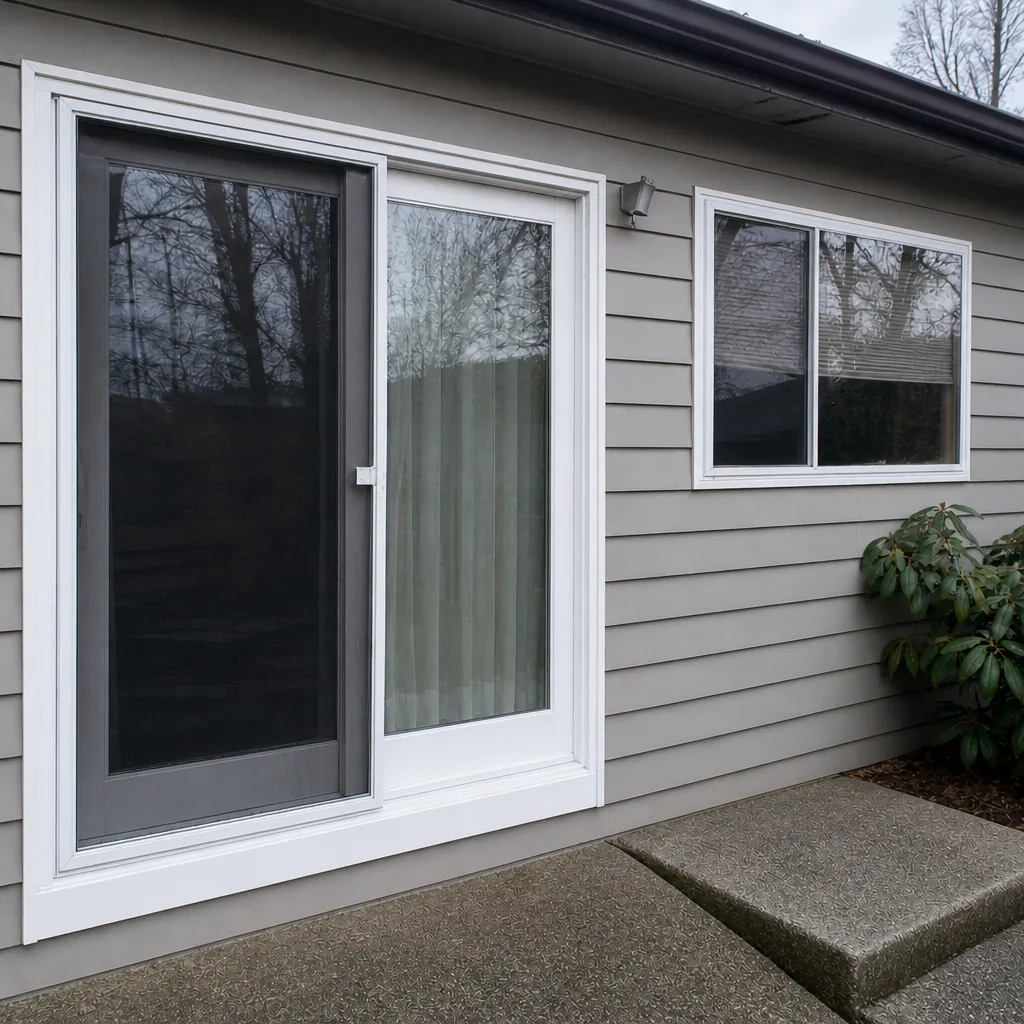 After
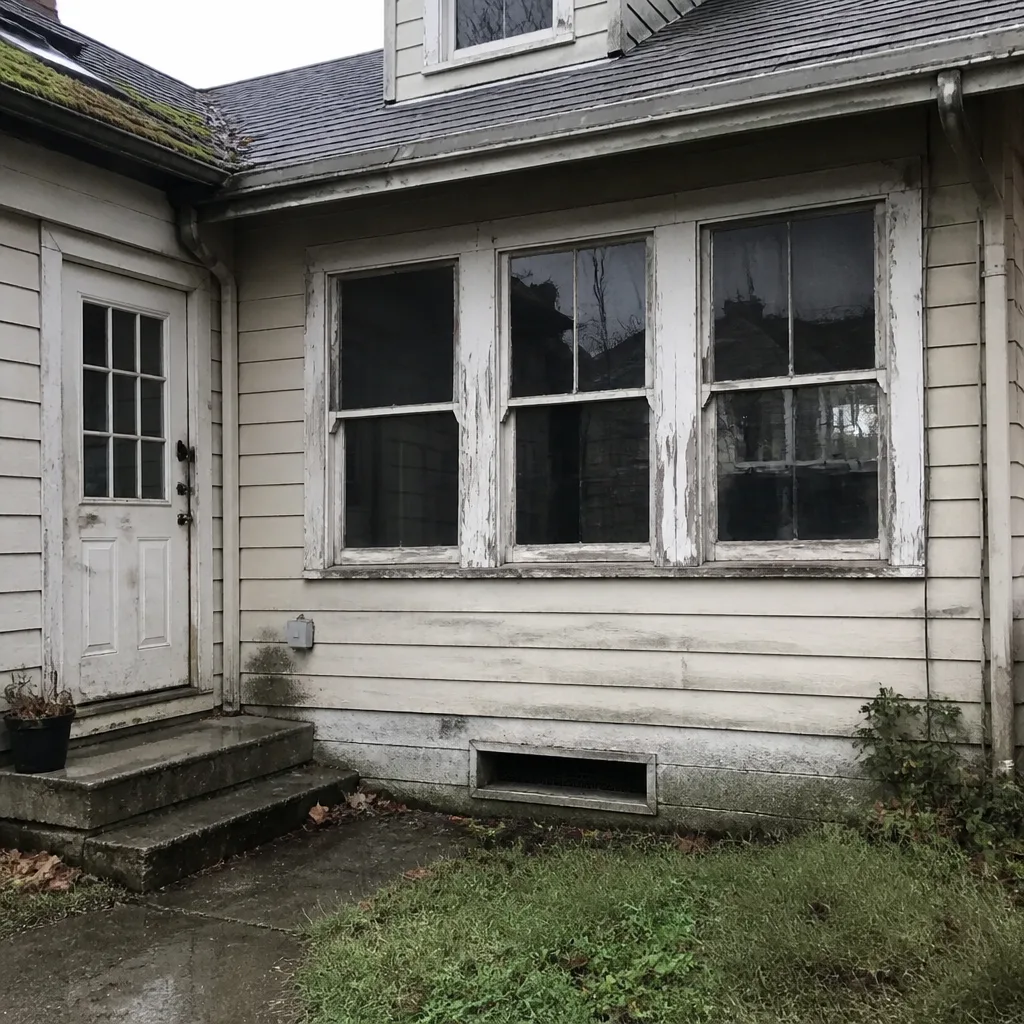 Before
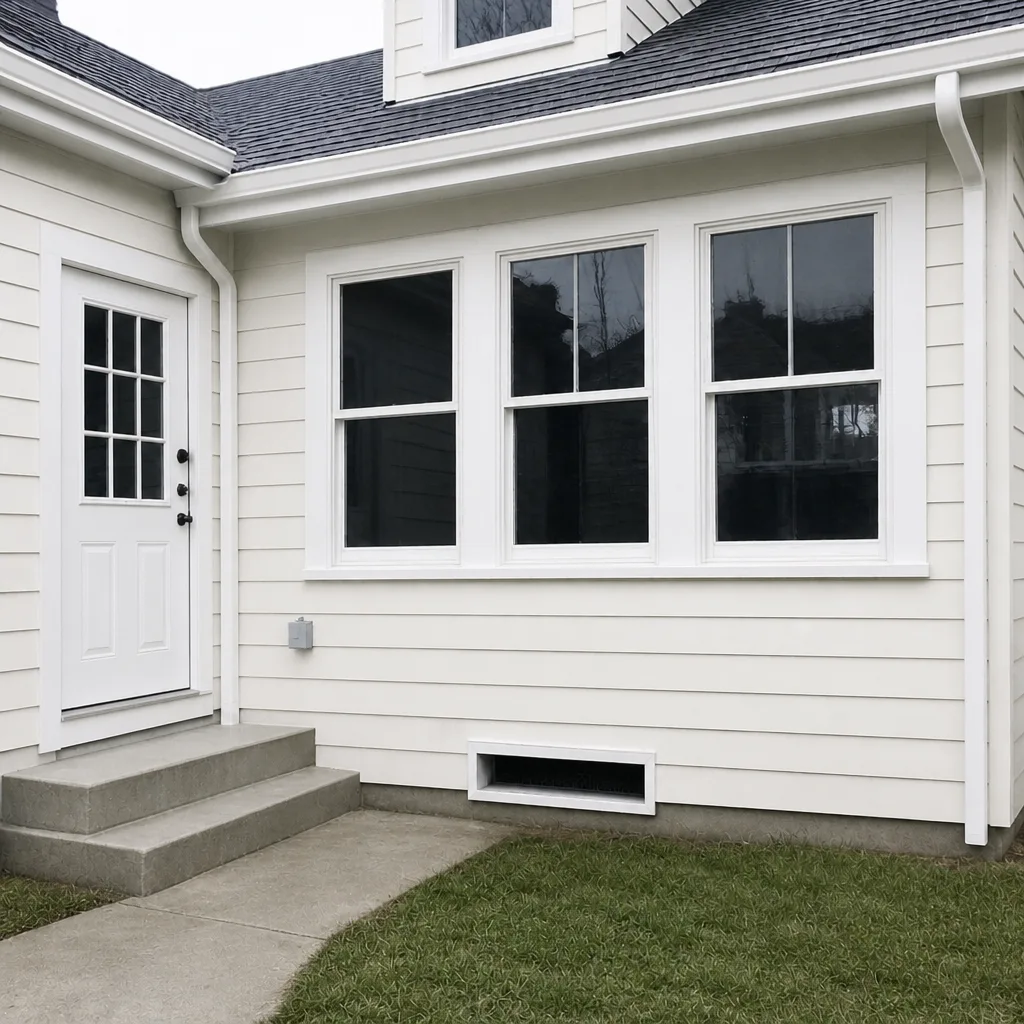 After
When to Call a Professional
Seasonal care is homeowner territory – clearing weep holes, cleaning moss, swapping screens, adjusting a strike plate. Most of the tasks in this guide are things you can do yourself. It’s when the guides point to something structural that a professional should look. Call for a professional assessment if you have between-pane fogging or droplets, if a frame feels soft anywhere near a sill or corner, if water is coming in during rain even after you’ve cleared the drains, if a door won’t stay aligned after adjustment, or if a north-facing frame has moss that comes back after cleaning. Each of those signals that water has already succeeded and the problem is now behind the surface. Tacoma Window Replacement Pros offers free estimates in Tacoma – call (253) 295-7077 to schedule one, and the written line-item quote will tell you exactly what you’re looking at before any work begins.
Frequently Asked Questions
Walk the exterior once per season and do the deeper checks – filling the sealant joints, clearing drainage, swapping storm door panes – twice a year. Tacoma’s moisture cycle, rather than temperature, is what drives degradation, so the checks should follow the rain rather than the calendar.
Usually not. Condensation on the room-side of the glass is normal surface moisture driven by indoor humidity, which climbs in a closed-up Tacoma home in winter. If the fog is trapped between the panes and you can’t wipe it off, the seal has failed and the unit needs replacement. Call (253) 295-7077 for an assessment if you’re not sure which you have.
Because composite and wood frames and doors dry out and shrink in Tacoma’s dry July and August, settling slightly in the opening. A light strike-plate adjustment usually fixes it. If the door has moved enough that adjustment won’t hold, a professional should look at the frame.
No. We handle new window installation and window replacement only, and we don’t repair glass, seals, frames, hardware, or sliding door tracks. For failed seals, soft frames, or water intrusion, the answer is a new unit, fitted properly for the climate.
We take window and door installation projects of three openings or more. A single window or a pair isn’t a job we run, so the three-opening minimum keeps the project worth the crew and the scheduling. Call (253) 295-7077 to talk through what you need.
Because that side of a Tacoma home gets the least sun and stays damp longer than any other, which is exactly what moss needs. If it returns after cleaning, the growth has likely worked into the sealant joint and needs a professional look at the joint, and possibly the frame. Call (253) 295-7077 for a free estimate.
The Bottom Line
Tacoma’s seasons don’t punish with cold – they punish with water that never fully dries. The cadence in this guide tracks that: clear drainage before the November rain, manage winter humidity and watch for between-pane fog, treat spring moss before it reaches the sealant, adjust summer door shift before fall re-swells it, and swap storm door panes on the weather rather than the date. Do that and your windows and doors last longer here than they would with no plan at all. And when the signs point to replacement – failed seals, soft frames, doors that won’t hold alignment – a professional assessment and a free written estimate will tell you what’s really needed. Windows and doors only. It’s all we do.
Written by the team at Tacoma Window Replacement Pros.